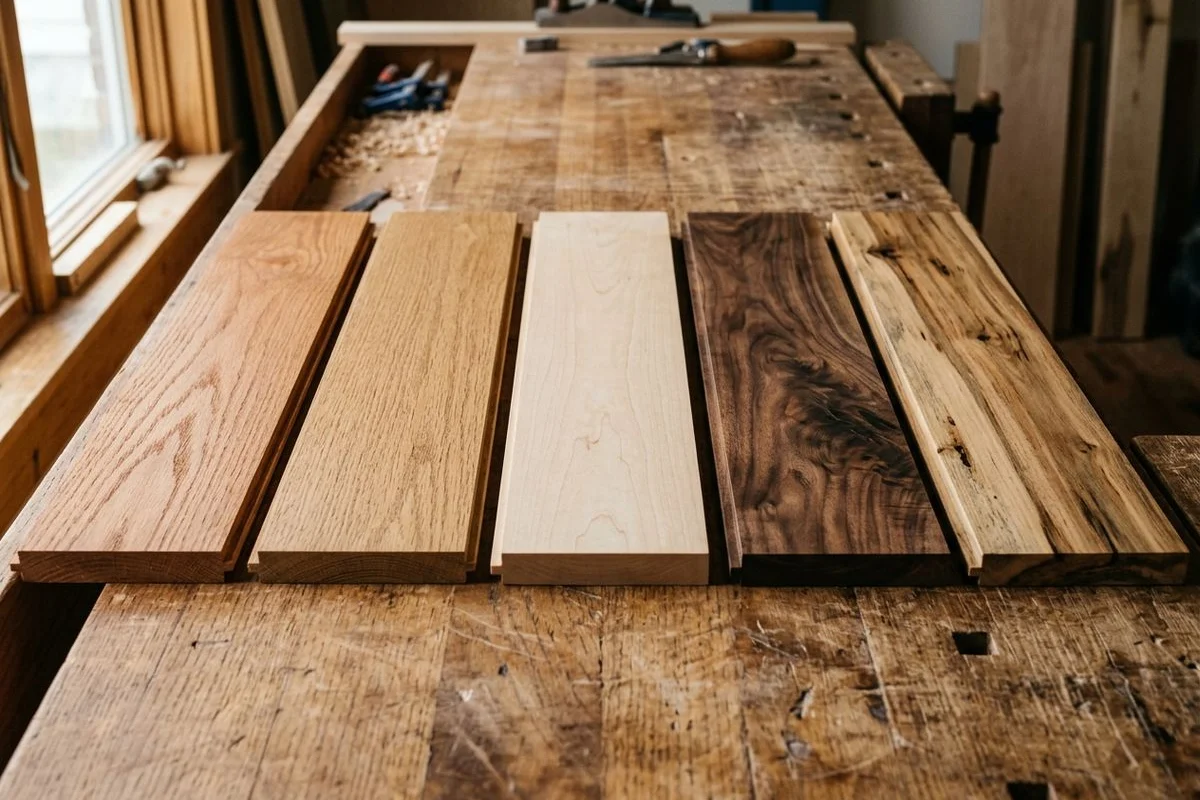
Why species selection is the most important decision in your flooring project
The species of hardwood you choose determines everything that follows - hardness, colour profile, grain character, price, and how the floor behaves through an Ontario winter. Get it wrong and a beautiful room still feels off. Get it right and the floor looks like it has been there for a hundred years.
Toronto Quality Wood Flooring approaches species selection by looking at three variables before anything else: the home’s architectural era, the daily traffic load in the space, and the household’s humidity control setup. A Rosedale Victorian with original plaster walls calls for something entirely different than a North York postwar bungalow or a new-build condo in Etobicoke.
Ontario’s climate adds a layer of complexity that installers in Houston or Phoenix simply do not deal with. Winter relative humidity in a forced-air heated Toronto home routinely drops to 15-25% RH without active humidification. Summer, particularly in un-air-conditioned basements, can push above 70% RH. That 50-point swing is one of the most demanding in North America, and every species handles it differently. The National Wood Flooring Association (NWFA) recommends maintaining 35-55% RH year-round - and 40-50% RH is the practical target for Toronto homes.
With that context in place, here is how the six most common species compare.
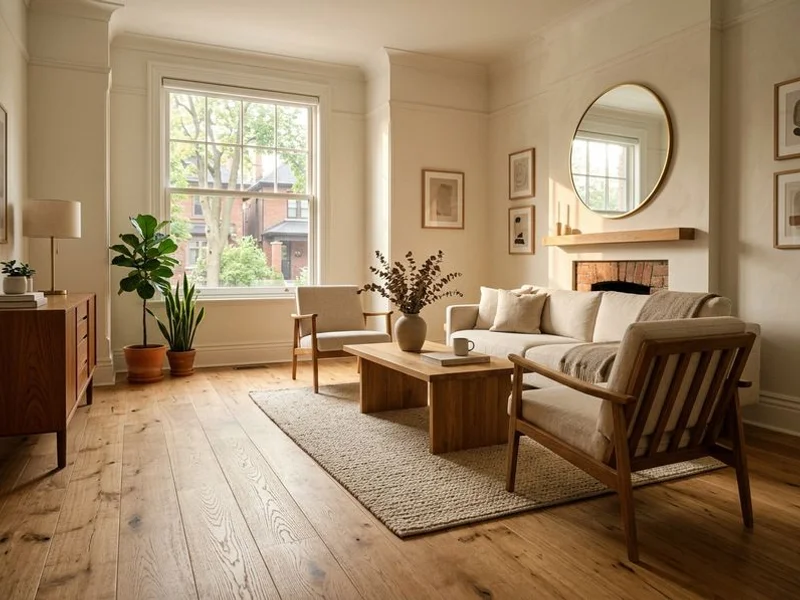
Janka hardness, grain, price, and best use - all six species compared
The Janka hardness test measures the force in pounds required to embed a steel ball halfway into a wood plank. It is the most reliable single predictor of dent resistance under daily foot traffic, furniture, and pet claws. Higher numbers mean greater resistance to surface damage.
| Species | Janka (lbf) | Grain Character | Material Price (per sq ft) | Best Use |
|---|---|---|---|---|
| Red Oak | 1,290 | Open, prominent rays, warm pink undertone | $4-7 | Postwar home matching, traditional interiors |
| White Oak | 1,360 | Tighter grain, uniform, grey-beige tone | $8-14 | Modern interiors, Rosedale/Forest Hill renovations |
| Hard Maple | 1,450 | Fine, straight grain, near-white colour | $5-8 | Kitchens, hallways, high-traffic commercial-grade use |
| Black Walnut | 1,010 | Smooth, chocolate-brown with straight figure | $12-18 | Formal rooms, adult households, premium main levels |
| Hickory | 1,820 | Dramatic colour variation, wild figure | $8-14 | Family rooms with pets, rental properties |
| White Ash | 1,320 | Coarser than Oak, greyer baseline tone | $5-9 | Scandinavian-style interiors, lighter contemporary palettes |
Red Oak - the default for postwar Toronto
Red Oak at 1,290 lbf Janka is the species that built Toronto’s residential housing stock. Walk into any North York bungalow built between 1945 and 1985 and the odds are high you are standing on original Red Oak strip flooring. Its open grain and pronounced ray fleck give it warmth that suits traditional and transitional interiors, and its moderate hardness holds up under normal family use without special care.
Red Oak accepts stain readily, though the open grain can telegraph colour inconsistencies. It does not take grey or white-wash finishes as cleanly as White Oak - the pink undertone bleeds through and muddles the result. For restoration work in Bedford Park, Lawrence Manor, and Etobicoke bungalows, Red Oak is almost always the right call for matching existing boards. At $4-7 per square foot for material, it is also the most budget-accessible domestic hardwood.
In terms of Ontario humidity response, Red Oak expands roughly 2% across its width for every 4% change in moisture content. A 3-inch strip in a home swinging from 20% RH in January to 65% RH in August will move approximately 1/8 inch across the grain over the full year. This is normal and manageable with proper humidity control.
White Oak - the modern premium standard
White Oak at 1,360 lbf sits just above Red Oak on the Janka scale, but the real difference is the grain. White Oak has smaller, tighter ray cells that give it a more uniform appearance and a grey-beige baseline colour that takes matte waterborne finishes and natural oil treatments far better than Red Oak.
This is the species Forest Hill and Rosedale renovations default to in 2026. Wide-plank White Oak in 5-inch and 7-inch widths, finished with Rubio Monocoat 2C or a matte Bona Traffic HD, reads as quietly luxurious in a way that pairs naturally with the proportions of a 1920s or 1930s brick home. Quartersawn and rift-sawn grades reduce surface figure variation further, producing an almost furniture-quality consistency across the floor.
Material pricing runs $8-14 per square foot, and European White Oak imports push toward the top of that range. The investment is justified in high-visibility spaces where the floor is the dominant design element.
Hard Maple - commercial-grade durability in a residential body
Hard Maple at 1,450 lbf is the species school gyms are built with. That tells you everything about its durability. It is the hardest common domestic hardwood after Hickory, and it is the right choice for kitchens, hallways, and any room that takes heavy, repetitive traffic day after day.
The tradeoff is finish sensitivity. Maple has tight, non-porous grain that resists stain penetration - attempting to apply a dark stain without a pre-conditioner results in blotching that cannot be sanded out without starting over. Most Maple installations stay natural or use a very light stain to work with the species rather than against it. The near-white colour makes it a strong fit for modern minimalist interiors where the floor is meant to recede and let furniture lead.
At $5-8 per square foot for material, Hard Maple is mid-range in price and upper-tier in performance.
Black Walnut - the premium soft option
Black Walnut at 1,010 lbf is the softest of the six species listed here, yet it commands the highest material price at $12-18 per square foot. The reason is purely aesthetic - no domestic hardwood produces a richer, darker floor out of the box. The chocolate-brown heartwood with occasional purple and grey undertones gives a room an immediate sense of warmth that Oak and Maple simply cannot match without staining.
Walnut moves less seasonally than Red Oak despite its lower density, which makes it a reasonable choice in humidity-controlled Toronto homes. The vulnerability is surface denting. Walnut will show dings from dropped items and heeled shoes that a harder species would shrug off. Toronto Quality Wood Flooring consistently recommends Walnut for formal dining rooms, home offices, and main-level living areas in households without large dogs or young children.
Finish it with Rubio Monocoat 2C to preserve the natural colour depth without a plastic surface sheen.
Hickory - the hardest domestic species
Hickory at 1,820 lbf is the most dent-resistant domestic hardwood available to Canadian homeowners. It handles pet claws, chair drops, high heels, and moving furniture without dimpling. If durability is the primary requirement, Hickory wins outright.
The visual character is polarising. Hickory has dramatic colour variation within individual boards - light cream sapwood sits alongside dark brown heartwood, and the grain figure can be wild. In a rustic farmhouse or casual family room this reads as character. In a formal or minimalist space it can look chaotic. At $8-14 per square foot for material, Hickory is competitively priced for its performance tier.
White Ash - the less-common alternative
White Ash at 1,320 lbf sits between Red Oak and White Oak in hardness. It has a coarser grain than either Oak species and a grey baseline tone that suits Scandinavian-inspired and contemporary interiors. Ash is significantly less common in Toronto residential installations than Oak, partly because supply has tightened following widespread Emerald Ash Borer damage to North American Ash trees.
When available, Ash is a strong choice for lighter contemporary palettes where White Oak feels too warm and Maple feels too pale. Expect to pay $5-9 per square foot for domestic White Ash material.
How to match species to home type
The right species depends on more than personal preference. The architectural character of the home and the typical Toronto humidity pattern in that specific structure both factor in.
- Victorian and Edwardian homes (Rosedale, Forest Hill, Cabbagetown): Quartersawn White Oak is the restoration-correct choice for replacing damaged boards. If the goal is a full refinish of original flooring, matching the existing species - often narrow Red Oak or Red Pine - is almost always preferred over replacement.
- Postwar suburban bungalows (North York, Etobicoke, Scarborough): Original Red Oak strip flooring in good structural condition should be refinished rather than replaced. If replacement is unavoidable, Red Oak ensures a seamless match to any remaining original boards.
- New-build condos and slab-on-grade homes: Engineered White Oak wide-plank is the standard. Solid hardwood cannot be nail-down installed over concrete, and engineered construction handles the humidity swings of a sealed concrete building better than solid wood.
- Heritage custom renovations with significant budgets: Black Walnut on the main level or a Walnut/White Oak mix across floors creates a layered, bespoke result that reads as considered rather than selected from a catalogue.
Ontario humidity and species acclimation
No matter which species you select, every board must acclimate in the installation room before a single nail goes in. Acclimation brings the wood’s moisture content in line with the home’s ambient conditions, preventing the gapping and cupping that follows when wood installed at the wrong moisture content encounters Toronto’s seasonal swings.
Solid hardwood in standard widths requires 3-5 days of acclimation with the HVAC running at normal occupancy conditions. Wide planks above 5 inches need 5-7 days. Engineered hardwood, with its cross-ply construction, reaches equilibrium faster at 2-3 days.
The NWFA target of 40-50% RH is achievable in most Toronto homes with a whole-home humidifier installed on the furnace - a $600-1,200 investment that pays for itself in avoided floor repairs over the first decade of ownership.
Ready to choose your species?
Toronto Quality Wood Flooring offers a free in-home estimate that includes a species recommendation based on your subfloor type, home era, traffic patterns, and design direction. You will receive a fixed-price written quote within 48 hours of the visit - no surprises once work begins. Visit our homepage to book your estimate or learn more about what we do.