Historic Wood Floor Restoration in Toronto, ON - Pre-1940 Heritage Homes, Narrow-Board Repair & Original Oak Refinishing
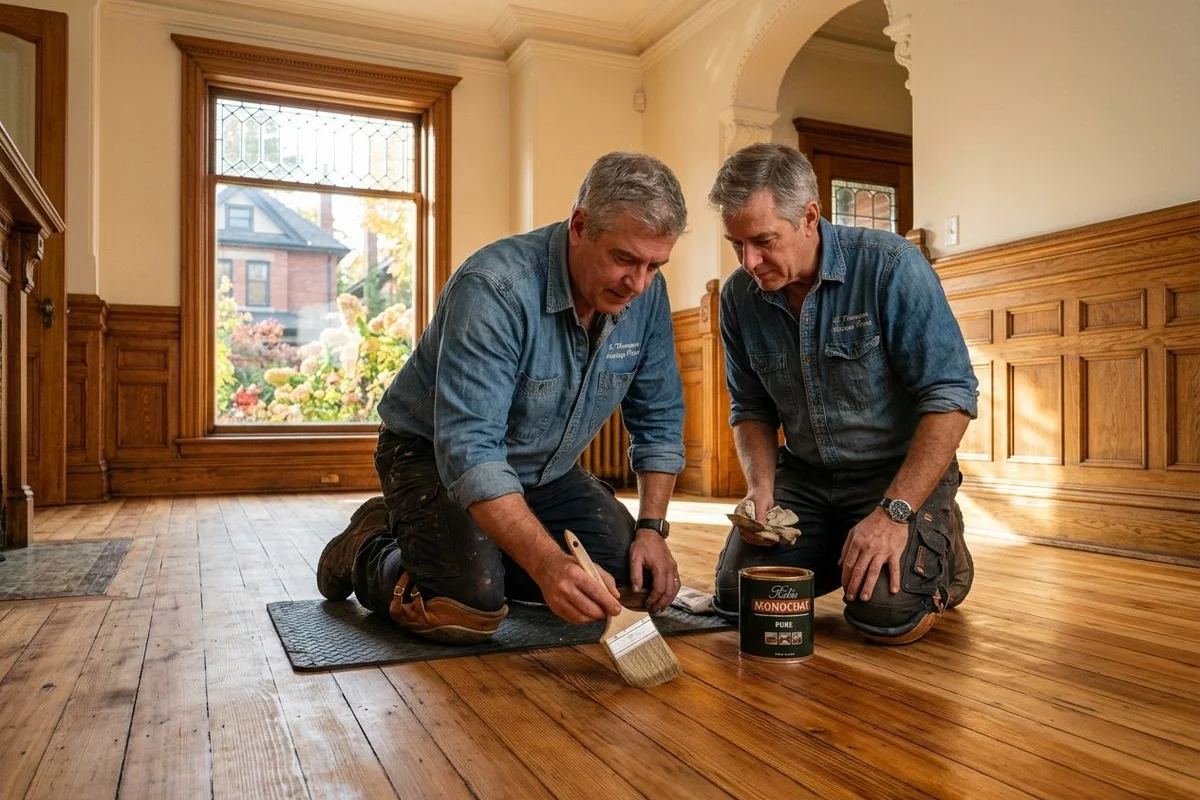
Toronto Quality Wood Flooring specialises in historic wood floor restoration for pre-1940 Toronto homes, covering narrow-board Red Pine in Cabbagetown and Annex houses from before 1910, quartersawn White Oak and narrow-strip Red Oak in Rosedale Victorians and Forest Hill Tudors from 1910 to 1940, and original parquetry in heritage entrance halls. Era-matched reclaimed stock is sourced through Ontario trade networks, original hand-scrape and wire-brush textures are replicated by hand, and Rubio Monocoat 2C hardwax oil delivers a period-correct low-sheen finish. Designated Toronto Heritage Register properties are handled with full documentation.
Standard refinishers use drum sanders and freshly milled replacement boards finished with high-gloss polyurethane - three things that permanently alter the character of a pre-1940 floor. Our restoration process begins with species and grain matching, sources reclaimed stock with comparable UV oxidation, replicates original surface textures, and applies finishes calibrated to period sheen levels. Most residential heritage restoration projects complete in 5 to 8 days depending on floor condition and parquetry scope.
Toronto Quality Wood Flooring provides historic wood floor restoration in Toronto, ON and surrounding communities, including North York, Etobicoke, Scarborough, Oakville, Burlington, Mississauga, Brampton, and Markham.
Heritage hardwood floor restoration in Toronto requires a fundamentally different approach than standard refinishing - species like narrow-board Red Pine and quartersawn White Oak from Rosedale Victorians and Cabbagetown terraces call for era-matched reclaimed sourcing, hand-scraped texture matching, and period-correct Rubio Monocoat 2C finishes that standard refinishers do not offer.
The most common mistake we see in pre-1940 Toronto homes: a standard refinisher goes in with a drum sander, uses freshly milled replacement boards, and applies a high-gloss polyurethane finish. Three things that permanently destroy the character of an original Victorian floor. The hand-scrape texture is gone. The replacement boards stick out because the grain and oxidation don’t match a century of use. The polyurethane sheen looks nothing like what was there in 1908. You cannot undo it. Restoration done wrong is worse than no restoration at all.
What Is Historic Wood Floor Restoration in Toronto?
Heritage restoration is not standard refinishing. A 100-year-old Red Pine or narrow-board Oak floor carries scars, face-nail patterns, and original hand-scraped texture. The species are not sitting on a modern lumberyard shelf. Toronto’s pre-1940 housing stock in Rosedale, Forest Hill, Cabbagetown, and the Annex contains original floors that have irreplaceable architectural value under the Ontario Heritage Act - value that a standard sand-and-finish will destroy rather than preserve.
What Does Heritage Restoration Include?
A complete heritage project covers the original-board diagnostic (lifting a single board to measure wear layer and identify species), era-matched reclaimed board sourcing through Ontario trade networks, hand-scraping and wire-brushing of new boards to match original texture, period-correct stain blending using Rubio Monocoat 2C or Bona DriFast for Victorian and Edwardian palettes, face-nailing with period-accurate hardware where required, and coordination with Toronto Heritage Preservation Services for designated properties.
How Much Does Heritage Restoration Cost in Toronto?
Heritage floor restoration in the GTA typically runs $8 to $18 per square foot depending on board repair scope, species sourcing requirements, and texture-matching work. A Rosedale second-floor Oak restoration with minimal board replacement lands at the lower end. Complex parquetry repair, reclaimed Red Pine sourcing, and medallion work push toward the upper range. We provide a fixed-price written quote after the in-home diagnostic.
Heritage restoration is not standard refinishing
A 100-year-old Red Pine or narrow-board Oak floor carries scars, face-nail patterns, and original hand-scraped texture. These species are not sitting on a modern lumberyard shelf today. Our heritage restoration process respects the era and the original craftsmanship at every step. Treating it like a standard sand-and-refinish loses what makes it valuable.
The work is concentrated in Toronto’s pre-1940 housing stock. We frequently visit Rosedale Victorians along Crescent Road, Forest Hill Tudors, Cabbagetown’s Victorian terraces, and the Annex’s late-Victorian residences. These original floors are typically narrow-board Red Pine, quartersawn White Oak, narrow-strip Red Oak, or period parquetry.
A recent evaluation of Toronto heritage properties showed that preserving original architectural elements directly supports the property’s cultural value under the Ontario Heritage Act. Replacing these historical boards destroys that authenticity.
Original-board diagnostic first
Heritage restoration starts with a diagnostic, rather than jumping right in with the sander. We lift a single board to confirm the species, milling style, and remaining wear-layer thickness above the tongue. A careful inspection is the only way to know what we are dealing with.
Measuring the Wear Layer
The thickness of the wood above the tongue dictates the entire project. We look for a wear layer that is still 3mm or more, which is about 1/8 of an inch. A floor with this thickness can typically be re-sanded one or two more times safely. Less than 2mm means the floor cannot handle aggressive sanding without splitting or exposing the tongue-and-groove joints.
Documenting Original Character
If the wood is too thin, a board replacement strategy using reclaimed stock is the best option. We photograph original details like face-nail patterns, hand-scraped texture, and original stain colours hidden under cabinetry. This documentation ensures the finished project replicates the historical aesthetic perfectly.
Era-matched reclaimed sourcing
When boards need replacement due to water damage or fractures, finding the right match is crucial. We source reclaimed era-matched stock through established trade networks across Ontario. A freshly milled modern board will stick out badly in a historic home.
Our salvage partners in places like the Muskoka and Parry Sound districts help us locate old-growth red pine. A reclaimed board from a similar-era demolition patches into a 1900 Rosedale floor beautifully. The grain pattern, oxidation, and milling style all match the original period perfectly.
Replicating the Original Texture
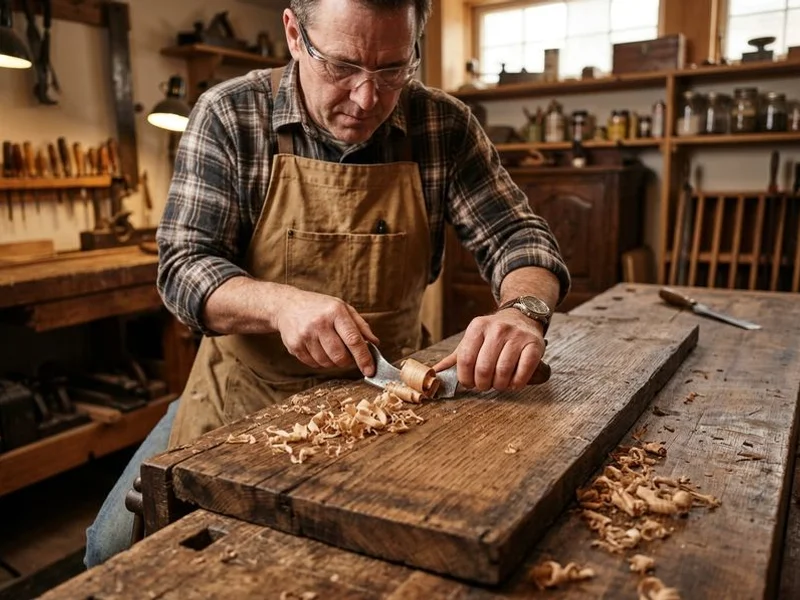
Modern lumber has a completely flat, planed mill-finish. Original Victorian Red Pine features hand-scrape marks, original wire-brush striations, or original drum-sanded chatter. We replicate that exact texture by hand on new boards before installation.
This process involves several specific techniques:
- Hand-scraping the surface to match the slight undulations of older boards.
- Wire-brushing the grain to recreate decades of natural wear.
- Applying custom stains to blend the oxidized colour of the salvaged piece with your existing floor.
- Face-nailing the boards using period-accurate hardware if the original floor used that method.
Period-correct finish selection
Choosing the right finish protects the wood while honoring its history. Most Victorian and Edwardian floors are best served by Rubio Mon
Heritage Restoration - What's Included
- Original-board diagnostic and per-board repair plan
- Era-matched reclaimed board sourcing (Red Pine, narrow Oak, period species)
- Hand-scraping and wire-brushing to match original texture
- Period-correct stain matching for Victorian, Edwardian, and 1920s-40s palettes
- Custom inlay and border repair (parquetry, medallions)
- Heritage-conservation-aware workflow
- Toronto Heritage Preservation Services coordination for designated properties
- Bona Dust Containment so occupied heritage homes stay clean
Heritage Restoration Pricing
All projects priced after a free in-home estimate. Written fixed-price quote within 48 hours - no surprises.
Why Toronto Homeowners Trust Us for Heritage Restoration
Heritage Specialization
Twenty years restoring Rosedale, Forest Hill, and Cabbagetown Victorian and Edwardian floors. We know the species, the milling styles, and the era.
Era-Matched Reclaimed Sourcing
We source reclaimed Red Pine, narrow Oak, and period species through trade networks. Patches match the original - not 'close enough'.
Hand-Scraped Texture Matching
Original Victorian floors carry hand-scraped or wire-brushed texture from the period. We replicate that texture by hand on new boards.
Conservation Awareness
We coordinate with Toronto Heritage Preservation Services for designated properties and work within heritage-conservation guidelines.
Our Heritage Restoration Process
Heritage Diagnostic
Lift a board to confirm species, milling style, and remaining wear-layer thickness. Photograph original details to preserve in the restoration.
Source & Repair
Source era-matched reclaimed stock (Red Pine, quartersawn Oak, period species). Repair or replace damaged boards per the diagnostic plan.
Hand-Match Texture
Hand-scrape or wire-brush new boards to match the original surface texture. Custom stain blend for period-correct color.
Period-Correct Finish
Rubio Monocoat 2C hardwax oil for most Victorian and Edwardian homes (matches original linseed-oil character). Bona Traffic HD when a more durable modern finish is preferred.
Ready for a free in-home estimate?
Fixed-price written quote within 48 hours. No surprises. No high-pressure calls.
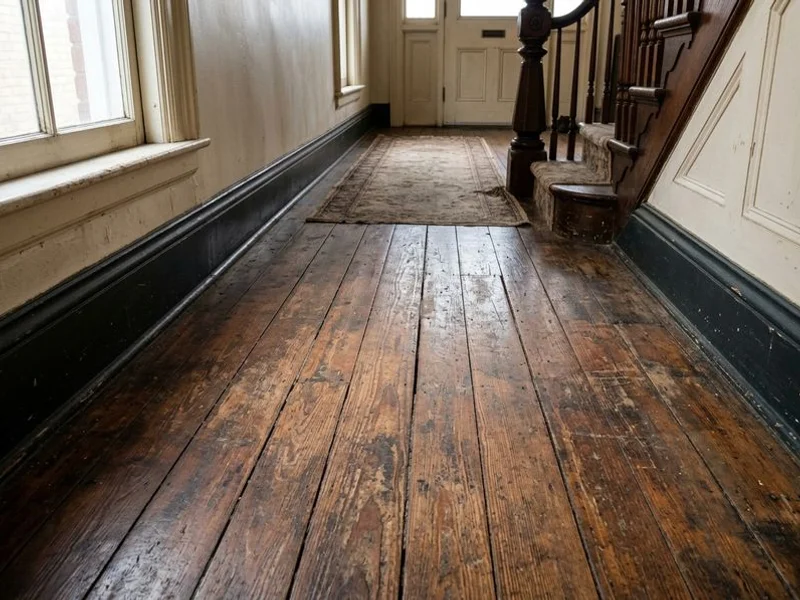
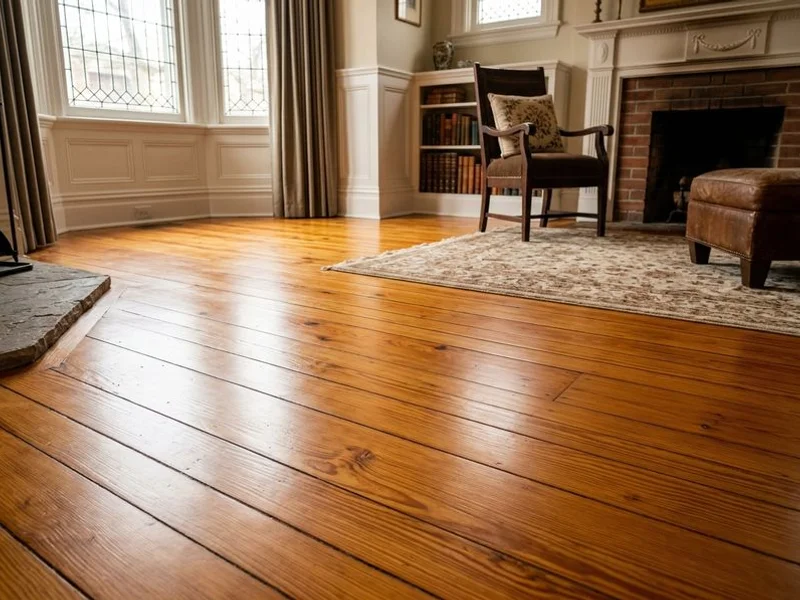
Our Heritage Restoration Portfolio
What Customers Say About Our Heritage Restoration
★★★★★"We had our 1908 Cabbagetown floors restored last spring. They identified the original Red Pine, sourced reclaimed era-matched boards for the patch sections, and finished in a Rubio hardwax oil that looks exactly like the floors did the day they were laid."
★★★★★"The 1921 Red Pine in our main floor had three layers of old finish and a bad patch from the 1970s. They stripped it back, sourced matching reclaimed Pine for the patch, and refinished with Rubio Monocoat at a flat sheen. The patch is invisible - we would never have known it was not original."
★★★★★"We bought a 1938 Tudor and the White Oak floors had been painted over in the 1980s. Full restoration - paint removal, three-stage grit sanding, Rubio Monocoat 2C Oil at a flat period-correct sheen. The floors are the best-looking thing in the house now."
Heritage Restoration FAQs
Can my Victorian floor be saved?
Usually yes. The diagnostic question is remaining board thickness - if the wear layer above the tongue is more than about 3mm, the floor can typically be re-sanded once or twice more. We assess by lifting a single board, evaluate the species (most pre-1940 Toronto Victorians used Red Pine or narrow-board Oak), then plan the project. We work in Rosedale, Cabbagetown, the Annex, and Forest Hill heritage homes regularly.
Do you source reclaimed wood for patches?
Yes. We source era-matched reclaimed stock through trade networks - narrow-board Red Pine, quartersawn Oak, period strip species. A reclaimed era-matched board patches into the existing floor much more invisibly than a modern milled equivalent, because the grain pattern and oxidation match the original.
Can you match the original 1920s stain?
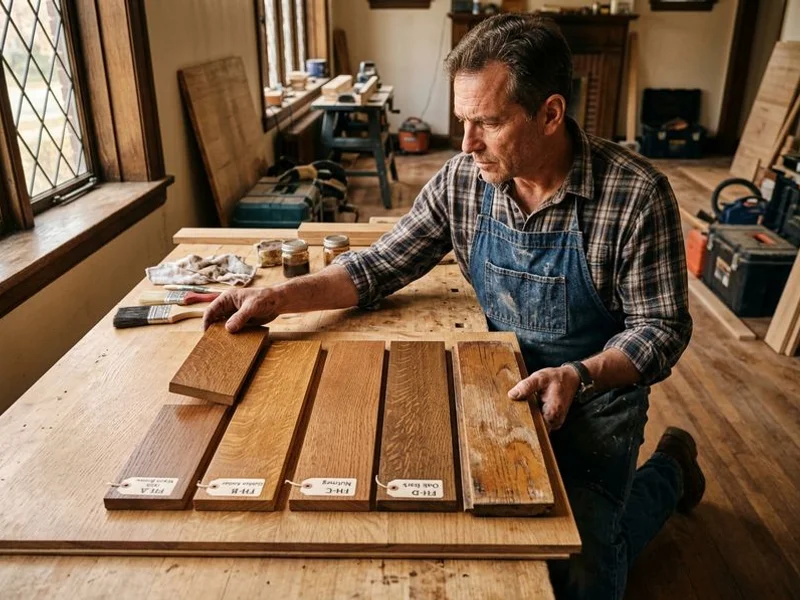
Yes. We custom-blend stain using Rubio Monocoat 2C Oil or Bona DriFast stain to match period palettes - typically warm amber and umber tones for Victorian and Edwardian, deeper walnut and ebony for 1920s-40s. We bring a sample set to the in-home estimate so the color is approved before any sanding starts.
What is the typical cost for a Rosedale or Forest Hill heritage restoration?
Heritage restoration in Toronto typically runs $8 to $18 per square foot depending on board repair scope, species sourcing requirements, and texture-matching work. Custom pattern repair (parquetry, medallions, borders) extends from there. We provide a fixed-price written quote after the in-home diagnostic.
How long does a heritage restoration project take?
A typical Rosedale or Forest Hill heritage restoration runs 7 to 14 days depending on board repair scope and species sourcing. Standard sand-and-refinish on the second-floor Oak of a Rosedale heritage home is 4 to 5 days. Complex pattern repair or large-scope board replacement extends from there.
Do you work in heritage-designated properties?
Yes. We coordinate with Toronto Heritage Preservation Services for designated properties and follow conservation guidelines on original-board restoration, finish selection, and reclaimed-board sourcing for patches. Many of our Rosedale, Cabbagetown, and Old Oakville projects involve designated properties.
Heritage Restoration Guides & Resources
Restoring Lath-and-Plaster Era Hardwood Floors
Pre-1940 lath-and-plaster Toronto homes have unique floor restoration challenges. Subfloor access, original species, fastening systems, and what to expect.
Restoring Victorian-Era Toronto Hardwood Floors
Toronto Victorian floor restoration in Rosedale, Cabbagetown, and the Annex. Narrow-board Red Pine, face-nail patterns, era-matched reclaimed sourcing.
What Is Historic Wood Floor Restoration?
Heritage restoration differs from standard refinishing. Original-board diagnostic, era-matched reclaimed sourcing, hand-scraped texture, period-correct finishes.
Heritage Hardwood Floor Restoration Cost in Ontario
Heritage restoration costs in Ontario: $8-$18 per sq ft, with parquetry, board replacement, and reclaimed sourcing add-ons. Real Toronto project examples.
Original-Board Restoration vs Replacement
How to decide between preserving original heritage hardwood boards vs replacing them with reclaimed era-matched stock. The diagnostic framework.
More Toronto Hardwood Flooring Services
Ready to Book Heritage Restoration?
Twenty years of Toronto craftsmanship. Bona Certified. Fixed-price written quote within 48 hours of the in-home visit.
Get Your Free Estimate Call 647-905-0255