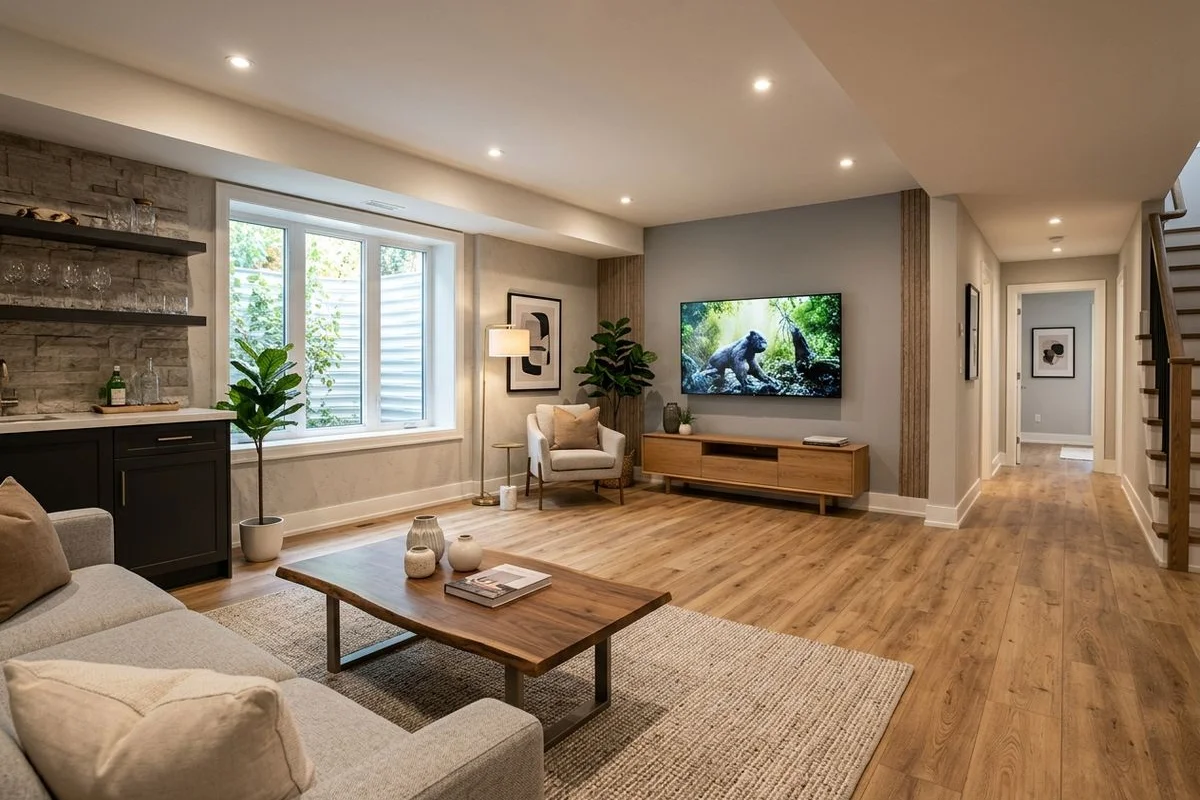
Luxury Vinyl Plank Flooring in Toronto, ON - Waterproof SPC, Click-Lock Installation & Vinyl Plank Repair
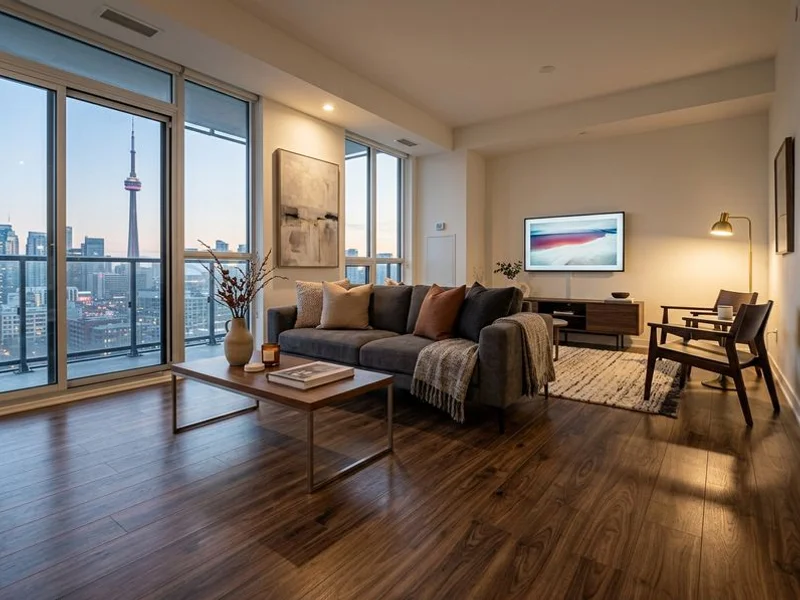
Toronto Quality Wood Flooring installs 100% waterproof SPC rigid-core luxury vinyl plank for finished basements, kitchens, mudrooms, bathrooms, and slab-on-grade installs across the GTA where below-grade moisture rules out solid hardwood and thin-core laminate. We carry COREtec, Karndean, and Pergo Extreme in 20-mil residential and 28-mil commercial-grade wear layers, test every concrete slab to ASTM F2170 before quoting, and install using click-lock floating with a vapour barrier or full-spread glue-down for permanent commercial applications. Condo installs in Humber Bay, Yorkville, and downtown Toronto use certified acoustic underlayment meeting IIC 55 to 67 building requirements.
Residential SPC installations for spaces up to 1,000 square feet typically complete in 1 to 2 days. Commercial projects across Mississauga offices, Brampton retail, and Toronto restaurant spaces complete in 3 to 5 days. Installed cost runs $5 to $12 per square foot depending on wear layer, install method, and subfloor prep required. SPC rigid core does not expand, buckle, or gap through Toronto winters at -25C or summers above 30C - the primary reason we recommend it over WPC core and thin-core laminate for any below-grade or high-humidity application.
Toronto Quality Wood Flooring provides luxury vinyl plank flooring in Toronto, ON and surrounding communities, including Mississauga, North York, Brampton, Etobicoke, Scarborough, Vaughan, and Markham.
Luxury vinyl plank flooring in Toronto with SPC rigid core is the standard solution for finished basements, kitchens, mudrooms, and slab-on-grade homes across Mississauga, North York, Etobicoke, and Brampton where solid hardwood is not rated and LVP’s 100% waterproof construction eliminates the seasonal humidity risk entirely.
The most common call we get every spring: a finished basement floor that buckled or gapped over winter. Almost always one of three things - WPC core that expanded under the seasonal temperature swing, no vapor barrier on the slab, or a floating install with no expansion gaps at the walls. The product gets blamed. The install was the problem. Genuine SPC rigid core with a proper vapor barrier and correct perimeter gaps does not buckle, gap, or cup - through -25°C winters and +35°C summers.
What Is Luxury Vinyl Plank (LVP) Flooring in Toronto?
Luxury vinyl plank is a multi-layer engineered vinyl product built around a Stone Plastic Composite rigid core. Unlike laminate (HDF core) or solid hardwood, the SPC mineral-based core is 100% waterproof - not just moisture-resistant. Standing water on the surface does not damage the planks. This makes LVP the strongest fit for Toronto finished basements, kitchens, mudrooms, bathrooms, and any slab-on-grade install where seasonal humidity and below-grade moisture are permanent realities.
What Does LVP Installation Include?
A Toronto LVP project covers slab moisture testing with a calibrated Tramex or Wagner meter (ASTM F2170 protocol), subfloor levelling to within 3mm over 3 metres, vapor barrier installation on concrete, acclimation of planks for 24 to 48 hours, click-lock floating install (standard for residential basements) or glue-down (commercial and high-traffic spaces), certified acoustic underlayment for condo installs meeting IIC/STC requirements, and all transitions, quarter-round, and threshold strips.
How Much Does LVP Flooring Cost in Toronto?
LVP flooring in Toronto runs $4 to $12 per square foot for material and installation combined. Mid-grade 20-mil wear layer SPC LVP in a standard basement install lands in the $6 to $9 range. Premium wide-plank 28-mil commercial-grade LVP for kitchens and high-traffic family rooms runs $9 to $12. This is slightly higher than AC4 laminate but the fully waterproof construction is worth the step-up for any below-grade or moisture-exposed install.
What luxury vinyl plank is
When exploring Luxury Vinyl Plank (LVP) Sales & Installation, the first step is understanding the material itself.
Luxury vinyl plank, commonly known as LVP, is a multi-layer engineered vinyl product created to mimic natural materials.
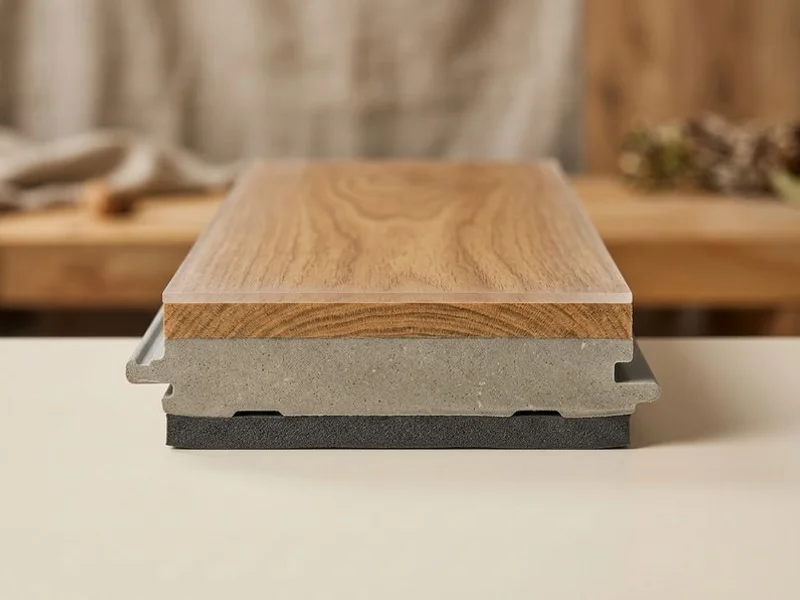
This flooring features an advanced construction:
- A clear vinyl wear layer: Protects against scratches and pet claws.
- A high-definition design layer: Uses advanced 3D printing to replicate natural wood grains.
- A vinyl backing layer: Provides stability and comfort.
- An SPC rigid core: Formed from stone and plastic to remain 100 percent waterproof.
Our installers focus almost exclusively on this premium Stone Plastic Composite category.
The result is a plank that looks like real wood, feels incredibly solid underfoot, and is genuinely waterproof instead of just moisture-resistant.
For Toronto and the Greater Toronto Area, this technology matters immensely because below-grade installation is our most frequent project type.
Finished basements in North York, Don Mills, Mississauga, and Etobicoke face constant slab moisture.
We see summer humidity levels in these basements easily hit 50 percent, which quickly destroys traditional solid hardwood.
LVP completely solves this problem.
Kitchens with heavy islands, mudrooms covered in winter slush, and busy laundry rooms all tell the same story.
The SPC rigid core simply ignores water, while the surface wear layer easily handles daily abuse.
A 2026 industry report shows the Canadian LVP market is growing by over 6 percent annually, with homeowners actively choosing this material for high-traffic, moisture-prone zones.
Click-lock floating vs glue-down
Most residential LVP installations use a click-lock floating method.
The planks lock together edge-to-edge, float directly over a vapor-barrier underlayment, and go down fast.
We prefer floating installation because it handles seasonal expansion naturally and allows us to work over slightly uneven subfloors.
Future board replacement is also incredibly easy if a specific section gets damaged.
For a typical finished basement or a suburban family room, click-lock floating is the perfect approach.
Things change quickly when you move into a downtown highrise.
Our team deals with strict Toronto condo board regulations daily, and these buildings almost always require specific acoustic performance.
You must meet minimum Impact Insulation Class (IIC) and Sound Transmission Class (STC) ratings, typically starting at 55 and sometimes reaching up to 67.
We use certified acoustic underlayment systems to ensure your new floor passes these rigid condo inspections.
Glue-down LVP is the right call for commercial projects, very high-traffic spaces, and situations where the underlying subfloor is perfectly flat.
This method feels more solid underfoot and eliminates any hollow tapping sounds.
We always recommend glue-down installations for a quieter floor in multi-story applications or when laying flooring over radiant heating systems.
Here is a quick breakdown to help you choose the right method for your space:
| Feature | Click-Lock Floating | Glue-Down Installation |
|---|---|---|
| Best Application | Houses, basements, condos with acoustic underlay | Commercial spaces, large open areas |
| Subfloor Tolerance | Forgiving of minor imperfections | Requires a perfectly flat surface |
| Acoustic Rating | Meets condo rules with proper underlay | Naturally quieter, lower sound transmission |
| Repair Process | Simple plank replacement | Requires scraping and re-gluing |
SPC, WPC, and wear-layer tier
Choosing the right plank involves understanding what is inside the core and how thick the protective top coat is.
We guide every client through these specific technical choices to ensure the floor lasts for decades.
Understanding the Core: SPC vs WPC
SPC rigid core is the standard premium LVP construction on the market today.
These planks are denser, much harder, and significantly more dimensionally stable than older alternatives.
WPC, or Wood Plastic Composite, features a wood-based core that feels slightly softer underfoot.
Our experience shows that WPC is highly susceptible to expansion and contraction under heat or direct sunlight.
For Toronto installations, we rely almost exclusively on SPC products.
The Greater Toronto Area experiences massive seasonal temperature swings, often dropping to -20°C in the winter and soaring above 30°C in the summer.
This extreme climate variation causes WPC to buckle, but the temperature stability of a stone composite core remains completely unaffected.
Selecting the Right Wear Layer
Wear-layer thickness is the exact specification that drives long-term durability.
This clear coating sits on top of the design layer and takes the brunt of daily foot traffic.
We default to a 20-mil commercial-grade wear layer for all residential projects.
This thickness hits the perfect balance of price and maximum durability for busy family rooms, active kitchens, and high-traffic basements.
For commercial installations, busy restaurants, and rental properties with high turnover, a standard wear layer is simply not enough.
Our commercial teams step up to a heavy-duty 28-mil wear layer to handle constant abuse.
You save money in the long run by matching the wear layer exactly to your expected daily traffic.
Free in-home estimate and slab moisture test
Every successful LVP project starts with a detailed, free in-home visit.
We take the time to evaluate your specific environment before a single plank is ordered.
For basement and slab-on-grade installations, testing concrete slab moisture is absolutely mandatory.
LVP is far more forgiving than solid hardwood, but extreme moisture readings still require proper mitigation to prevent the adhesive from failing or the planks from buckling.
Our technicians use professional tools, like a Tramex or Wagner calibrated meter, to measure the exact Relative Humidity inside the concrete.
The industry-standard ASTM F2170 testing protocol guides our process to ensure total accuracy.
Most premium vinyl products require the concrete relative humidity to sit below 75 percent.
If your slab tests higher than this acceptable limit, we will recommend a dedicated moisture barrier system to protect your investment.
During the visit, we handle several key tasks to prepare for a flawless installation:
- Measure exact square footage: To eliminate material waste and control your costs.
- Identify subfloor leveling needs: To prevent dips and hollow spots under the final floor.
- Review technical options: Discussing the benefits of SPC over WPC and selecting the right wear-layer tier.
- Determine installation methods: Finalizing the choice between click-lock floating or a glue-down approach.
We process all this data quickly and deliver a fixed-price, written quote to your inbox within 48 hours.
You will have all the specific numbers and product details you need to make an informed, confident decision.
Start Your Flooring Project Today
Related Questions Toronto Homeowners Ask
Is LVP truly waterproof or just water-resistant?
Genuine SPC (Stone Plastic Composite) rigid-core LVP is 100% waterproof - the core is mineral-based, not wood-based, so surface water does not damage the planks. Click-lock LVP can handle surface flooding for hours without cupping or swelling. The caveat is that water getting under the floor from a slab leak or failed vapor barrier can still affect the subfloor structure, even if the LVP itself survives. Proper vapor barrier installation on concrete is mandatory.
LVP or laminate for a Toronto basement - which should I choose?
LVP by a clear margin for basements. Modern moisture-resistant laminate handles day-to-day humidity well, but the HDF core is not fully waterproof - prolonged water at seams can cause swelling. SPC rigid-core LVP is genuinely waterproof and the standard recommendation for finished basements, kitchens, mudrooms, and bathrooms. The price difference between quality AC4 laminate and mid-grade LVP is small enough that for any below-grade install, we default to LVP.
What is the difference between SPC and WPC vinyl plank?
SPC (Stone Plastic Composite) is a dense, rigid mineral-based core - dimensionally stable in Toronto’s wide temperature range, resistant to buckling from summer heat, the industry standard for residential and commercial installs. WPC (Wood Plastic Composite) is a wood-based composite core - softer underfoot, slightly lighter, but prone to expansion under heat. For Toronto’s climate range (-25°C to +35°C), we install almost exclusively SPC products.
Does LVP meet Toronto condo building requirements?
It can, with the right underlayment. Most Toronto condo buildings require minimum Impact Insulation Class (IIC) and Sound Transmission Class (STC) ratings, typically starting at IIC 55 and sometimes reaching IIC 67 for upper floors. We use certified acoustic underlayment systems designed to meet these specifications. We review the building’s specific requirements before quoting and confirm the underlayment system will pass before installation begins.
Can LVP be installed over existing tile or hardwood?
Yes in many cases. Floating click-lock LVP installs over level tile, existing vinyl sheet flooring, or low-pile carpet (standard pile must be removed). Glue-down LVP requires a clean, level subs
LVP Flooring - What's Included
- 100% waterproof SPC rigid-core construction
- Hardwood-look wear layers in oak, walnut, and grey-wash tones
- Click-lock floating and glue-down install methods
- Self-leveling subfloor prep when needed
- Commercial-grade wear layer options
- Pet-claw-resistant top layer
- 20-30 year manufacturer warranties
- Quiet underfoot with premium underlayment
LVP Flooring Pricing
All projects priced after a free in-home estimate. Written fixed-price quote within 48 hours - no surprises.
Why Toronto Homeowners Trust Us for LVP Flooring
Genuine SPC Rigid Core
We supply genuine Stone Plastic Composite rigid-core LVP - not the budget WPC products that warp under heat. SPC is the right product for Toronto basements.
Moisture-Tested Slab Installs
We test every slab before quoting. LVP handles moisture better than any other product we install, but we still confirm the readings are within spec.
Commercial-Grade Wear Layers
20-mil and 28-mil commercial-grade wear layers for kitchens, mudrooms, and high-traffic family rooms. Manufacturer warranties up to 30 years.
Honest LVP-vs-Engineered Call
If engineered hardwood is the right fit (not the basement, no slab moisture concerns), we will tell you. We do not push LVP where solid wood belongs.
Our LVP Flooring Process
Slab Moisture Test
We test the concrete slab with a calibrated moisture meter. LVP is forgiving, but extreme moisture still needs mitigation before install.
Subfloor Prep
Self-level high or low spots greater than 3mm over 3m. Install vapor barrier on concrete. Acclimate planks 24-48 hours.
Install Method
Click-lock floating for most basement installs (faster, easier to repair). Glue-down for commercial-grade durability in high-traffic spaces.
Trim & Finish
Quarter-round, transitions, and threshold strips. Most LVP installs complete in 2-3 days for an average finished basement.
Ready for a free in-home estimate?
Fixed-price written quote within 48 hours. No surprises. No high-pressure calls.
Our LVP Flooring Portfolio
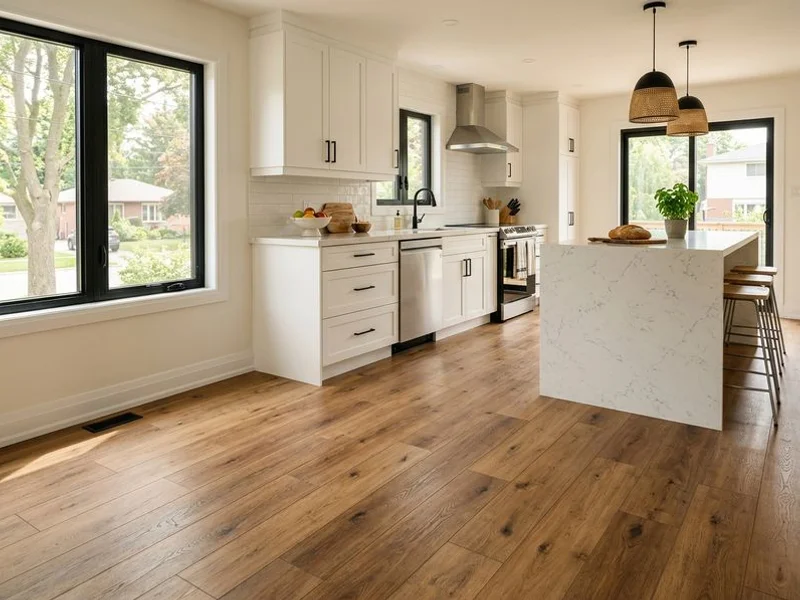
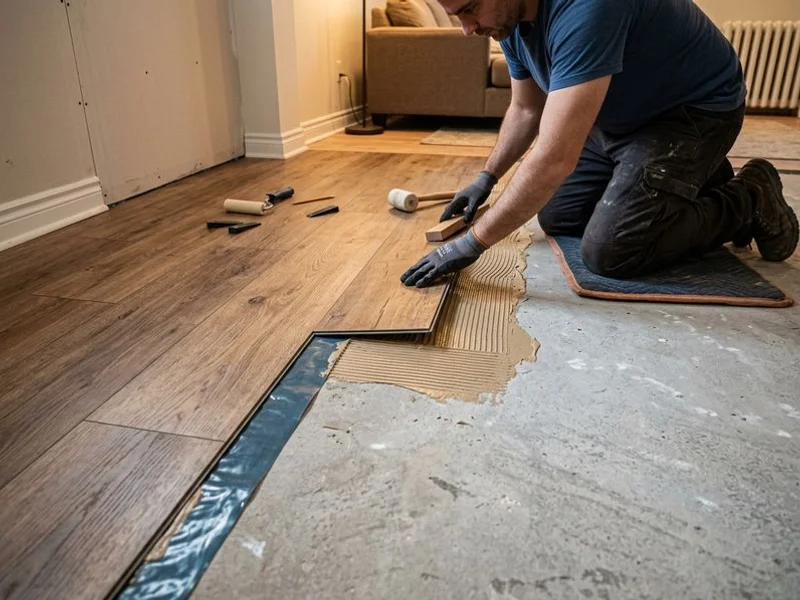
What Customers Say About Our LVP Flooring
★★★★★"Finished basement in Mississauga - they steered us to LVP over engineered hardwood because of the slab moisture readings and explained why. No upsell pressure. The floor looks like wood and the kids can spill juice on it without any worry."
★★★★★"Full basement renovation, 900 sq ft of SPC LVP over concrete. They tested the slab moisture first, installed a vapour barrier, and used a 20-mil COREtec wear layer for the kids' playroom traffic. Completely flat a year in, no gapping, no buckling. Looks like real oak from any distance."
★★★★★"New build kitchen and mudroom. They spec'd Shaw Floortec in a 28-mil wear layer for the mudroom boot traffic and installed it in one day. We are honestly happier with it than we would have been with the tile we originally wanted. Holds up to everything."
LVP Flooring FAQs
Is LVP waterproof?
Yes - genuine SPC (Stone Plastic Composite) rigid-core LVP is 100% waterproof. The core is mineral-based, not wood-based, so standing water on the surface does not damage the planks themselves. Click-lock LVP can handle surface flooding for hours without cupping or swelling. The caveat: water that gets under the floor (from a slab leak, for example) can still cause subfloor problems - the LVP itself survives, but the structure below it may not.
LVP vs laminate - which is better for a basement?
LVP, by a wide margin. Modern moisture-resistant laminate is good for many residential applications, but it is not fully waterproof - standing water on seams for hours can swell the HDF core. LVP with SPC rigid core is genuinely waterproof and the standard recommendation for finished basements, kitchens, mudrooms, and bathrooms. The price step from laminate to LVP is small enough that for below-grade installs, we almost always recommend LVP.
What is SPC vs WPC?
SPC (Stone Plastic Composite) is a mineral-rich rigid core - denser, harder, more dimensionally stable, and the standard recommendation for residential and commercial use. WPC (Wood Plastic Composite) is a wood-based composite core - softer underfoot, lighter, but more susceptible to expansion under heat. For Toronto installs we install almost exclusively SPC. WPC is fine for some applications but the temperature stability matters in Toronto's seasonal swing.
How thick should the wear layer be?
Wear layer is the clear top layer that protects the printed design layer below. 12-mil wear layer is light residential; 20-mil is commercial-grade and excellent for residential family rooms, kitchens, and high-traffic zones; 28-mil is heavy commercial and overkill for most homes. We default to 20-mil for residential projects and 28-mil for commercial installs.
Can LVP be installed over existing tile or vinyl?
Yes, in many cases. Floating click-lock LVP can install over level tile, existing vinyl sheet flooring, or low-pile carpet (carpet must be removed for thin-pile or with underlayment for low-pile). Glue-down LVP requires a clean, level substrate. We assess during the in-home visit and recommend whether tear-up is worth the cost.
Does LVP look like real wood?
Premium LVP looks remarkably realistic from standing height. The wear-layer photographs are high-resolution and the surface texture is embossed-in-register to match the printed grain. Most guests will read the floor as wood. At a close inspection (kneeling next to it under direct light), LVP is identifiable as not-wood. For a forever home or a heritage restoration, real wood is the right call. For a finished basement, a rental, a busy kitchen - LVP is the smart choice.
LVP Flooring Guides & Resources
LVP Flooring for Toronto Basements
SPC rigid-core LVP is the best basement floor for most Toronto homes. Slab moisture testing, vapor barrier, wear-layer thickness, and install method explained.
The Luxury Vinyl Plank Installation Process
Step-by-step LVP install process - slab moisture test, vapor barrier, click-lock or glue-down, perimeter expansion. The Toronto Quality Wood approach.
LVP vs Laminate vs Hardwood Flooring
LVP for waterproof basements, laminate for budget durability, hardwood for value and refinish. Cost, lifespan, refinish-ability, and use case compared.
More Toronto Hardwood Flooring Services
Ready to Book LVP Flooring?
Twenty years of Toronto craftsmanship. Bona Certified. Fixed-price written quote within 48 hours of the in-home visit.
Get Your Free Estimate Call 647-905-0255